State of Crime 2027 is a mature fictional crime simulation. This site contains references to adult themes and gameplay systems intended for adults only.
A record follows you longer than a sentence does.
An open-world crime sandbox set in real Maryland. 147 km² of streets, courts, corners, and consequences.
Most open-world crime games use the city as a backdrop. State of Crime treats it as a living system. Every mechanic connects. Every choice has a price.
Money is earned, laundered, and invested. Businesses generate passive income but attract police attention proportional to how dirty they are. Rob a district's stores and foot traffic drops. The economy reacts to you.
The world remembers. Crimes are witnessed and reported by specific NPCs. Wanted status decays realistically instead of vanishing. Damaged property stays damaged. Your save file captures the world, not just your inventory.
Police escalation is a simulation, not a switch. Witnesses must see a crime and report it. Response scales from a single patrol car to coordinated pursuit with helicopter support. Breaking visual contact genuinely loses them.
A 147 km² streamed open world along the real US Route 50 corridor. Every town appears in its real driving order, west to east, from Baltimore's row houses to Ocean City's boardwalk. Distances are compressed, but the geography is faithful.
The game world is moving from hand-authored corridor blockouts into a statewide Unreal pipeline: OpenStreetMap roads, bridges, cities, towns, landmarks, water features, beaches, phone stores, and building footprints streamed as data-driven tiles.
The raw road pull reached 906,053 OpenStreetMap ways. The runtime package keeps the roads, streets, and bridge geometry the game can actually stream today, while the raw pull can be regenerated when sidewalks, paths, service roads, and ultra-fine geometry are ready for production rendering.
No witness, no heat. Crimes only raise your wanted level if an NPC or officer actually sees you. Break line of sight, hide, and the stars decay. The system rewards planning, not chaos.
Guns require the HQL class, fingerprints, and a 7-day wait. Concealed carry is may-issue in 2017. A Draco down your pants leg prints on any stop. Traffic citations stack into bench warrants.
BPD, Baltimore County PD, Maryland State Police, Cambridge PD, county sheriffs, Natural Resources Police. Where you commit the crime decides whose cars show up.
Seven street drugs with real economics. Build rep from Lookout to Drug Lord. Recruit runners, hold corners that earn $260/day, and manage the raids that come for a name too big.
Sedans, sports cars, muscle, vans, trucks, dirt bikes, street bikes, mopeds. Fuel system, potholes that damage your suspension, brake lights, turn signals, chop shops.
Bystanders film your crimes and post them. Clips go viral, followers stack, fame cuts both ways. A creator fund pays daily, but recognition erodes no-snitch protection.
Arrest, booking, arraignment. Plead guilty, post bond, or hire a lawyer. File motions to suppress. Demand jury trials. Beat the case and expunge it for $30. Lose and carry the conviction.
2+ star convictions transport you to a real facility. Days tick off the sentence. Run the commissary economy, craft shanks, brew hooch, gamble, and move contraband at jail markups.
Every pedestrian has a conversation brain. Wire up a local LLM for generated dialogue or use the built-in rule engine. Archetypes bark in Baltimore lingo with OS text-to-speech.
Real-world policing, fictional brands.
Every arrest records how the stop happened.
Six slots. 18 parts. Real consequences.
Mirrors real Maryland law.
Everything costs what it really did.
Baltimore's Gun Trace Task Force, as a system.
Fewmint is the in-game premium currency. If it would cost money in real life, it costs Fewmint in State of Crime: phones, lawyers, tickets, commissary, rent, gas, permits, online orders, tools, vehicles, and every store purchase.
The player wallet is the bank account. The Fewmint Card is how stores, phone apps, delivery orders, jail accounts, court fees, and crew payments subtract from your personal balance.
All purchases are fictional gameplay transactions. In-game firearms, drugs, permits, legal services, deliveries, and restricted items never represent real-world purchases, authorization, or delivery.
Buy phones, parts, clothes, lumber, tools, food, vehicle repairs, and fake marketplace deliveries through the phone.
Pay tickets, lawyers, court costs, jail phone credits, commissary, restitution, impound, and supervision fees.
Robbery and looting can yield loose Fewmint, phones, wallets, and stolen cards, but every dirty item carries heat and evidence risk.
Own fronts, shops, garages, storage units, rentals, and crews. Income, taxes, payroll, repairs, insurance, and audits all matter.
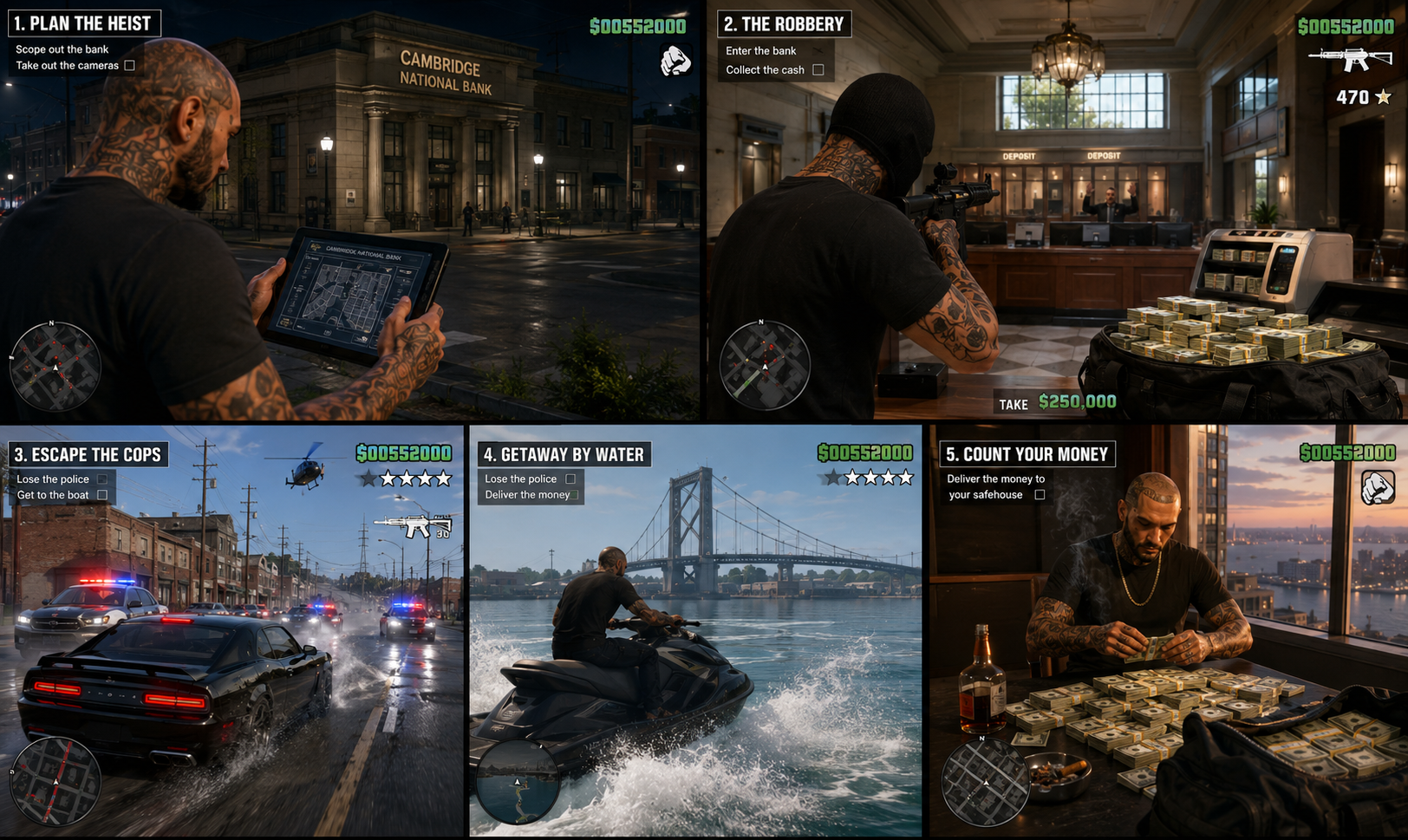
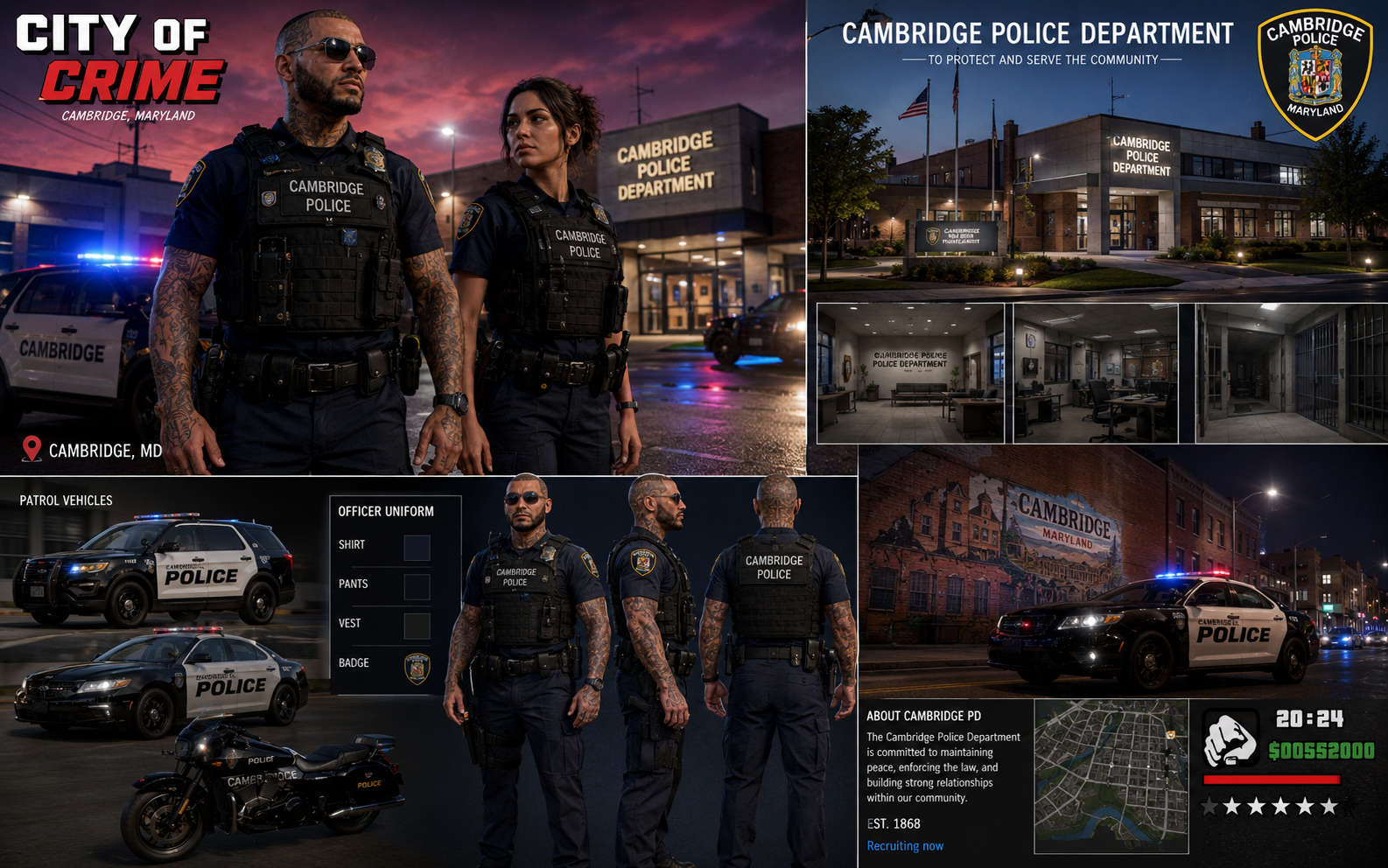
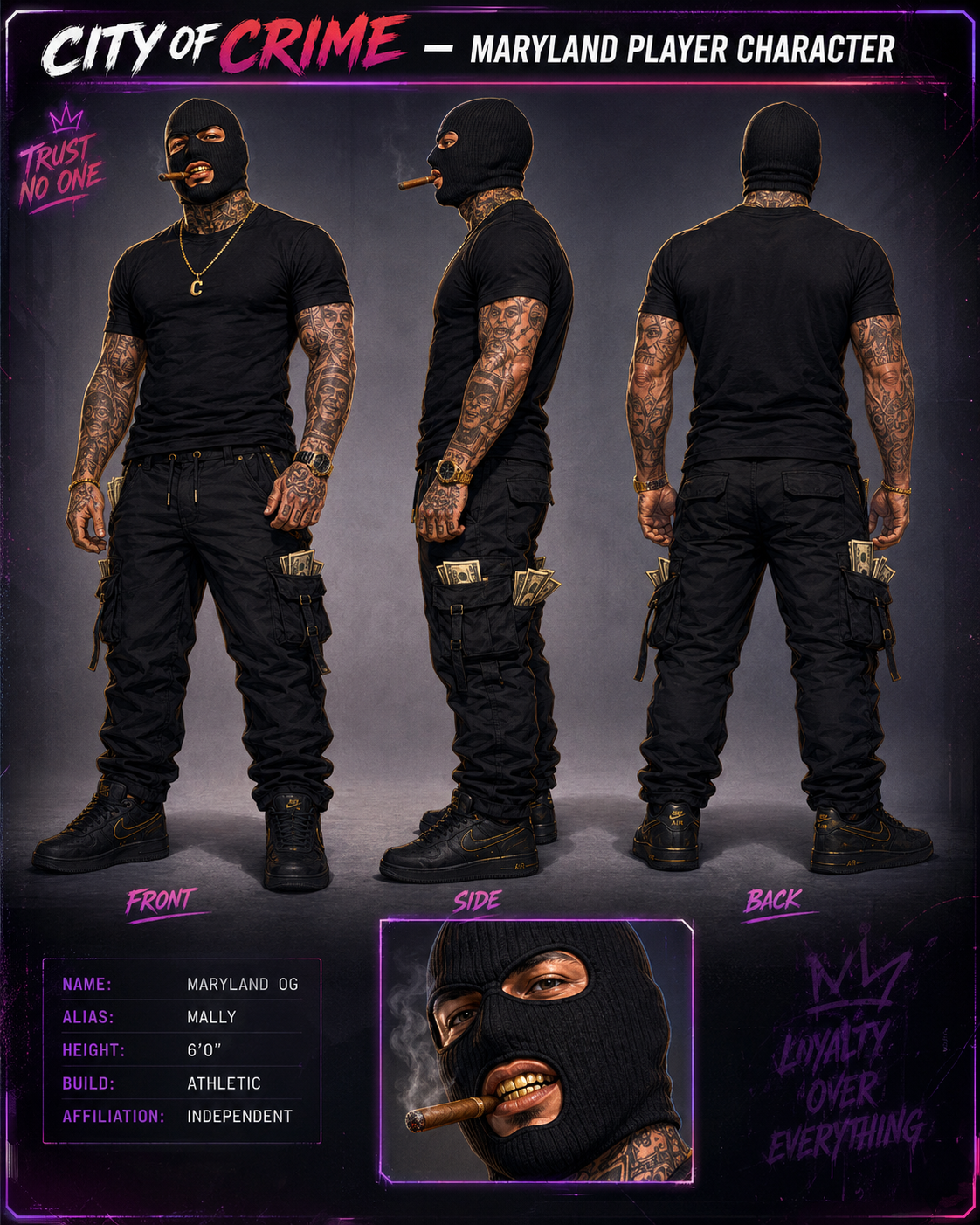
Official key art from the world of State of Crime — the man in the mask, the score that pays for everything, and the department hunting you across the corridor. Click any piece to view it full-size.

Trust no one. Loyalty over everything. Every build, tattoo, chain, and fit is yours to shape in the character creator.

Scope it, hit it, outrun the wire, launder it. Five stages, one mistake from a life sentence.

Play both sides. Patrol the corridor, work the barracks, and climb from recruit to command — est. 1868.


Based on 624 real Maryland State Police incidents from 2020-2026. This data powers the game's dynamic world events, police responses, and NPC behaviors.
Recent Maryland State Police reports. Every incident in this feed can appear as a dynamic event in the game world.
Street-level and jurisdiction-level incidents mapped across Maryland with satellite, streets, Route 50, and source precision layers.
Exact dots use source latitude/longitude. Jurisdiction dots use deterministic county or city placement until a live official street feed is connected.
Most crime games let you rob a store and spend the cash. Here, the money follows you home. Taxes, bills, debt, and the IRS all exist in this world. Here's how the economy actually works.
Every legal job withholds 24.4% from your paycheck — the real Maryland state + federal rate for 2017. A $8.75/hr retail job nets roughly $6.65/hr after taxes. Direct deposit hits your account, but the IRS sees every W-2. Underground income doesn't get taxed automatically, but if you file a return with suspicious numbers, expect an audit.
Yes. Unreported income triggers audit events. The IRS can levy bank accounts, garnish wages from legal jobs, and place liens on property. Filing a fraudulent return carries separate criminal charges. The game models real Maryland tax law — evasion is a felony that stacks on top of whatever else you're doing.
Every vehicle you own triggers Maryland's 6% excise tax at purchase plus annual registration fees. Property taxes hit quarterly based on real county ZHVI data — owning a house in Baltimore County costs less than Anne Arundel. Properties generate rental income but the tax bill arrives whether tenants pay or not.
Drug income is unreported by default, but laundering it through businesses creates a paper trail. Clean businesses pay corporate taxes and generate legitimate income — but also attract more IRS scrutiny if revenue doesn't match the business profile. Corner income ($260/day per corner) is cash-only and invisible until you deposit it.
Missed loan payments trigger repossession after 3 months. Unpaid taxes generate liens that block property sales. Medical debt from ER visits defaults to collections after the 6-month zero-interest plan expires. Credit score drops below 580 and you lose mortgage eligibility, car financing, and even phone plans. Debt spirals are real.
Form an LLC — legitimate business expenses become deductible. Mortgage interest reduces taxable income. Charitable donations (if you file) lower your bracket. Stock losses offset gains. The game models real tax planning strategies. Hiring a lawyer for $500/hr during arraignment might save you more than the fee costs in avoided fines.
Baltimore's Gun Trace Task Force conducts plainclothes jump-outs that seize up to 60% of cash and half your drugs during stops — even on clean, legal encounters. 18% chance they plant evidence. Every seized dollar feeds the federal wire. When the unit gets indicted, restitution checks go out, but you'll have already lost the cash.
Three-bureau scoring (Experian, Equifax, TransUnion) starting at 580. Payment history, credit utilization, hard inquiries, and account age all factor in. A 700+ score unlocks mortgages, low APR auto loans, and premium credit cards. Bankruptcy is an option — but it nukes your score for 7 in-game years and blocks all financing.
Watch the trailer, follow the build, and see Maryland come online piece by piece.
Watch Trailer